


1 in 3
Australians

live with
allergic disease

Every day, over 8 million Australians wake up with an allergy problem, constantly searching for
solutions—most of which offer only temporary relief.
Yet there are only just over 300 allergy specialists. Nationally.
On top of that, these specialists are usually available in urban areas, leaving out a large group of
patients in rural and regional areas.
It’s time we close that gap.
Find out what temporary fixes are REALLY costing you.
You're spending approximately:
on managing symptoms
1 in 3
Australians
live with
allergic disease
Allergies cost
Australians

$18.9 billion
a year
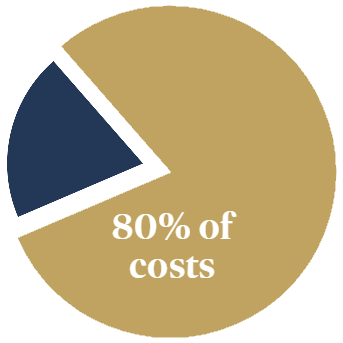
are linked to lost
productivity
There is around
one allergy specialist

for every
27,000 people
At Austral Allergy, we are dedicated to revolutionising allergy management through innovative partnerships with healthcare providers. Our mission is to empower you with cutting-edge resources, whether you’re making a referral, initiating immunotherapy, or accessing clinical support.
Together, we can enhance patient care and transform lives.

Can’t find a clinic near you? Our telehealth service can help you access personalised advice, treatment plans,
and ongoing support from home.
Allergen immunotherapy is a clinically proven, disease-modifying treatment program aimed at targeting the physiological cause of allergies,
LEARN MOREInjectable allergen immunotherapy, also known as subcutaneous immunotherapy (SCIT), is a long-term medical treatment designed to reduce allergic disease at its source.
LEARN MORESublingual allergen immunotherapy, commonly referred to as SLIT, is a long-term treatment designed to reduce allergic symptoms by gradually retraining.
LEARN MOREFood allergies are common in Australia and can affect people of all ages. They occur when the immune system reacts to certain proteins in food. While food allergies cannot be cured, careful management and planning can help you stay safe and live well.
LEARN MOREEnvironmental allergies are common in Australia and affect people of all ages. They occur when the immune system reacts to everyday substances in the environment, such as pollen, dust mites, mould or animal dander.
LEARN MORE